Pictures Worked in Wool
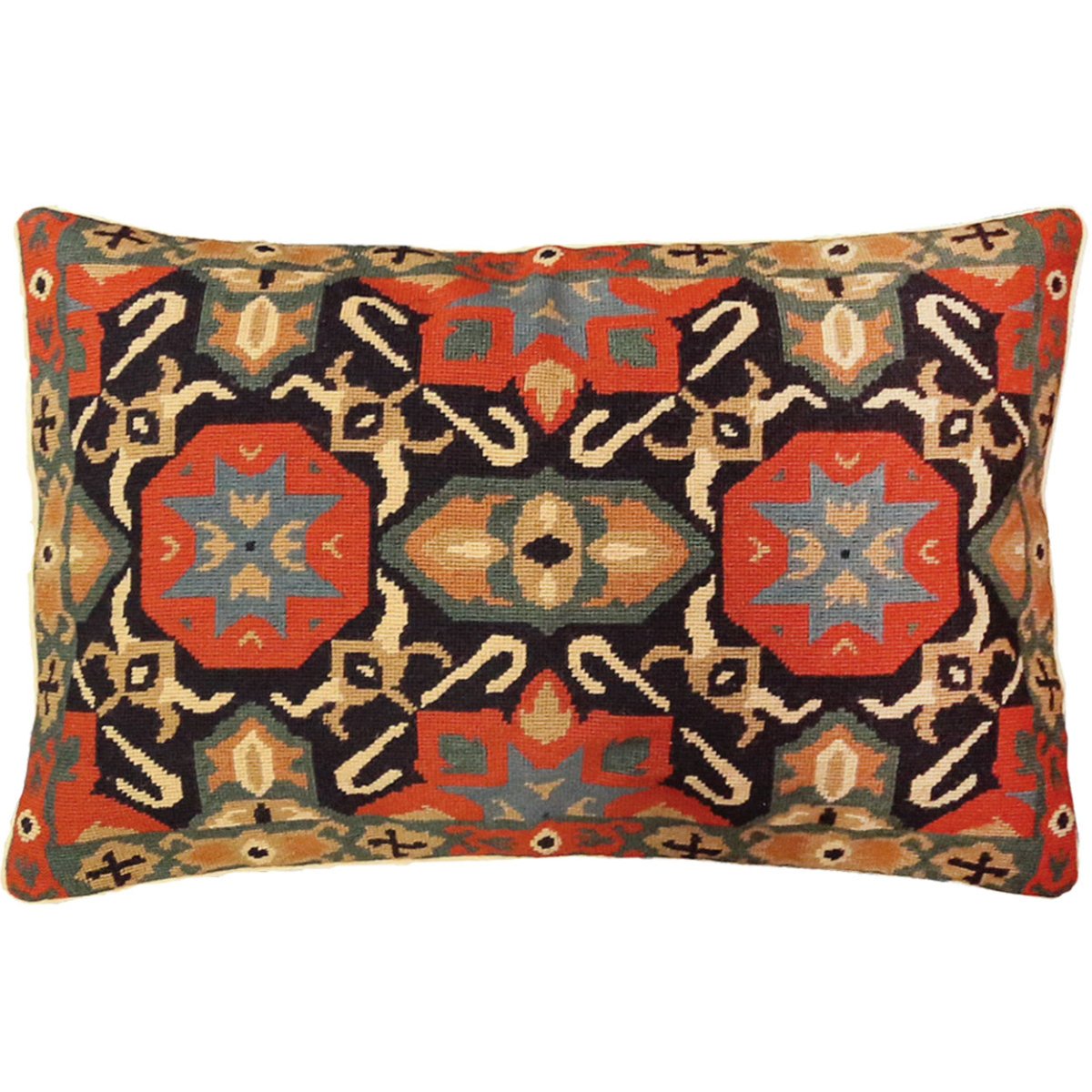
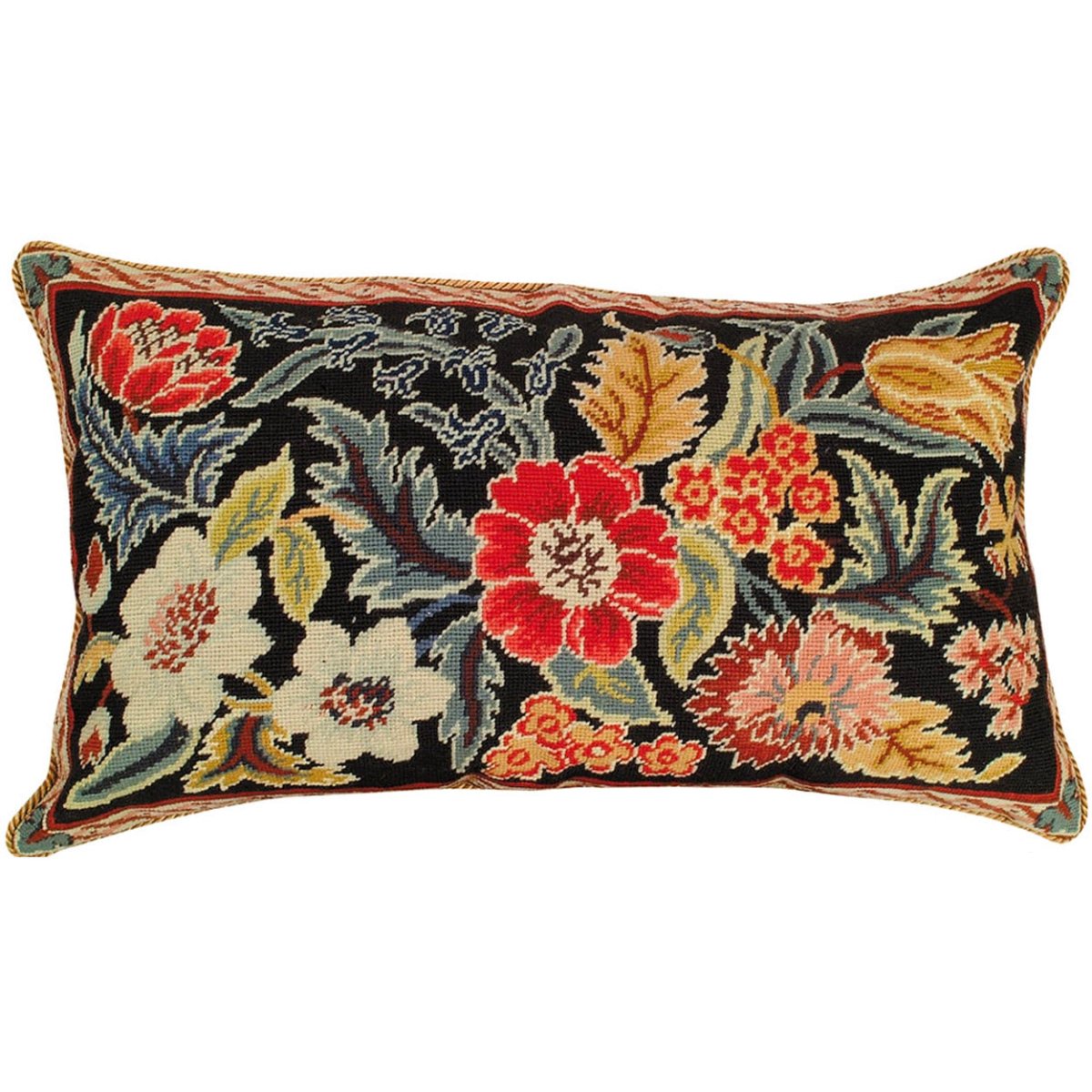
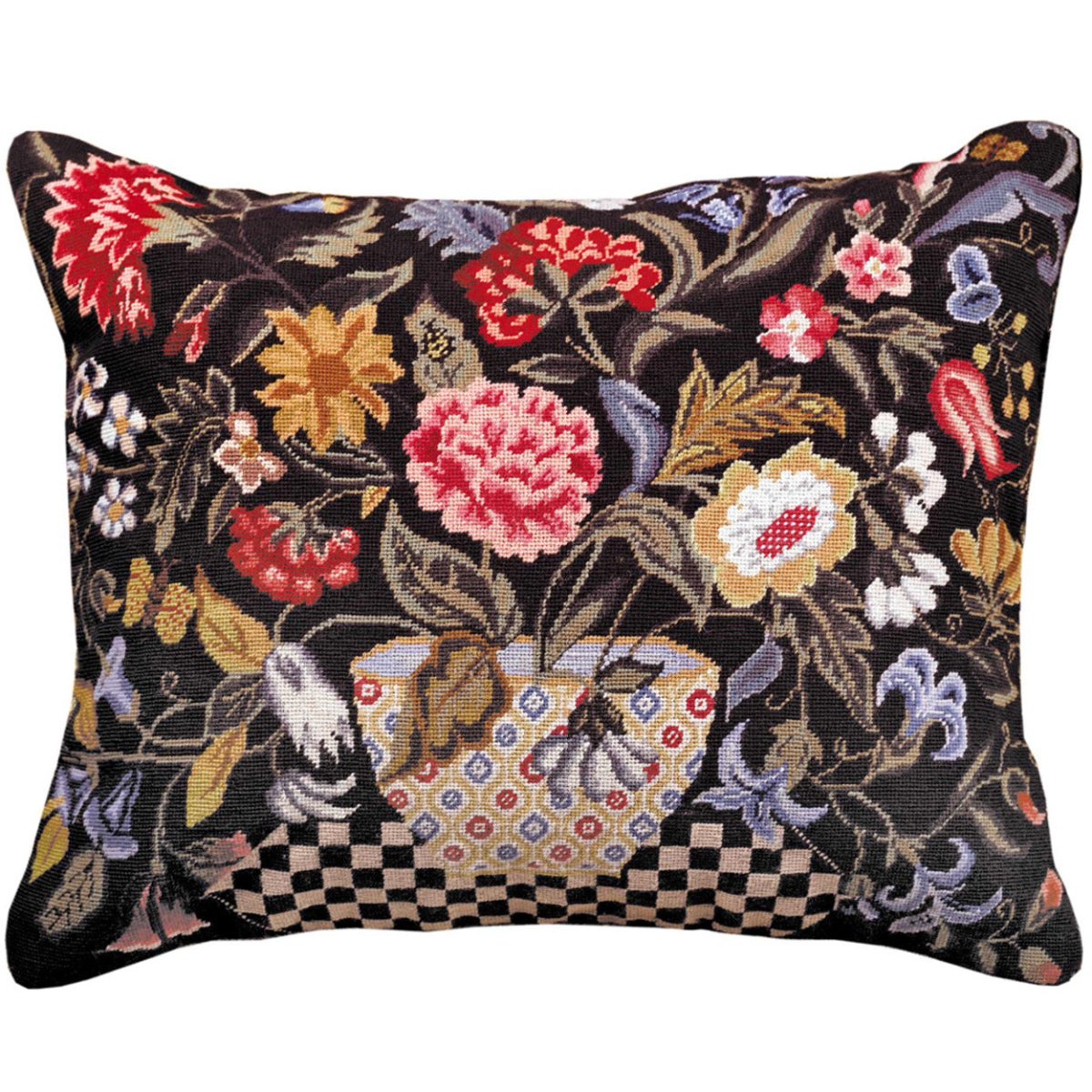
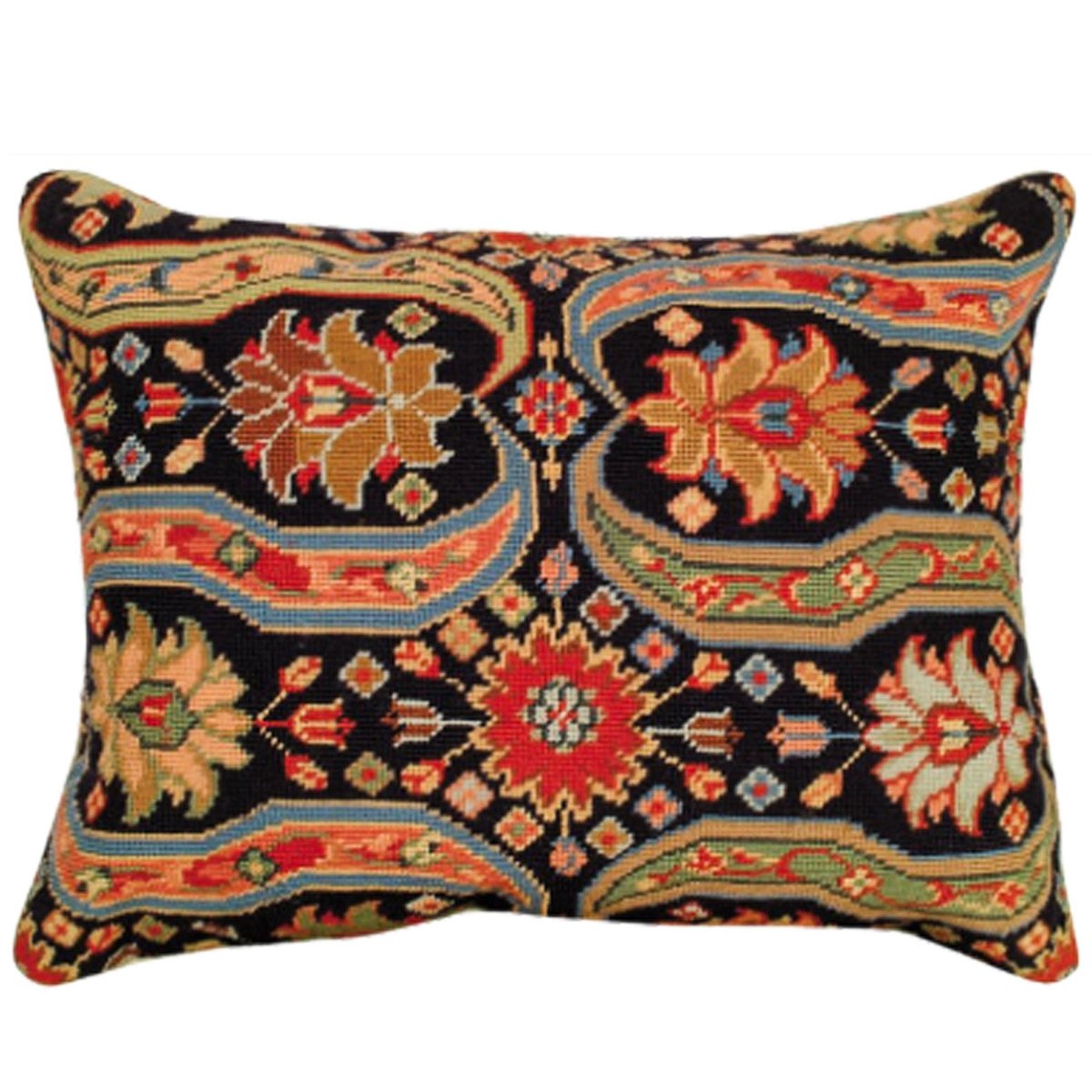
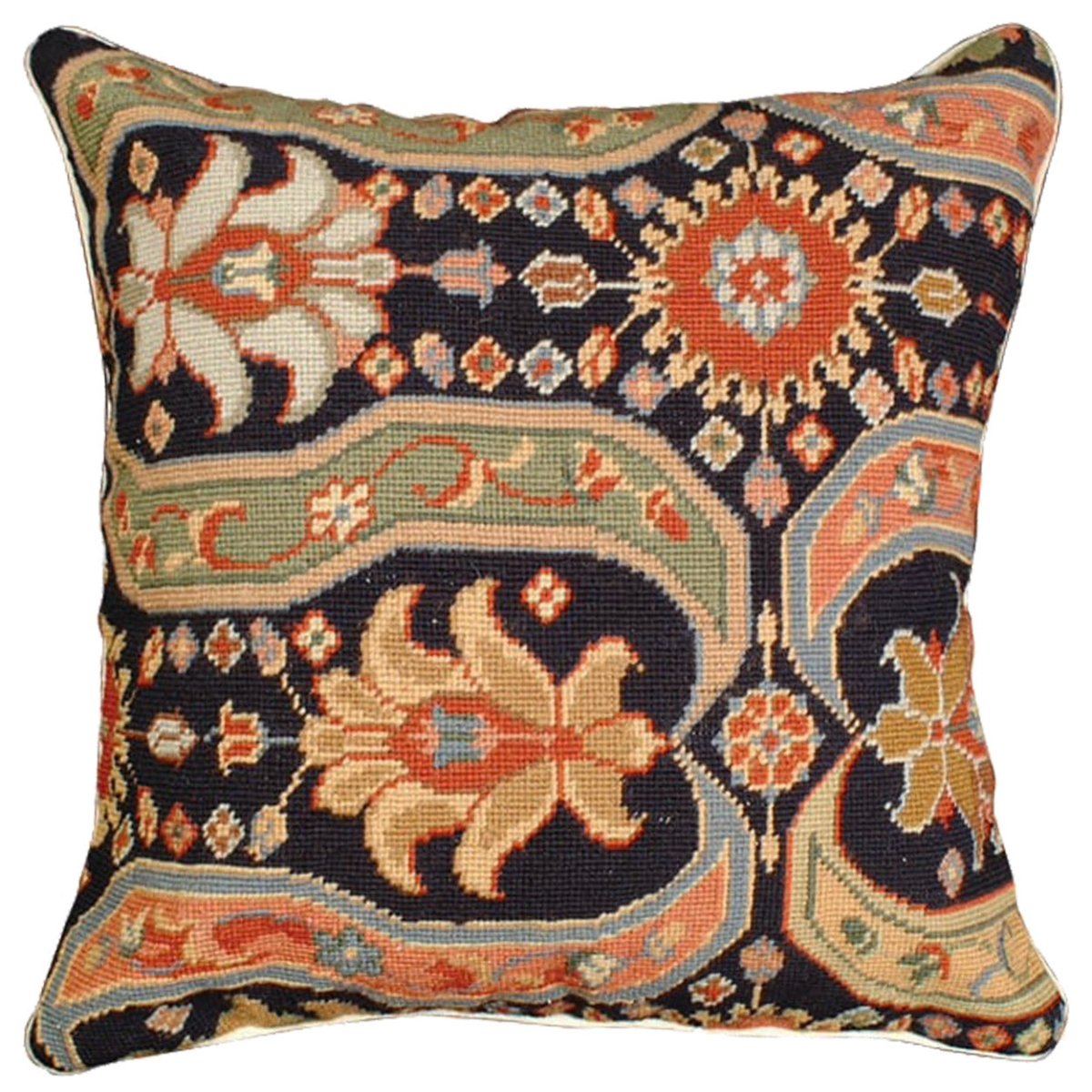
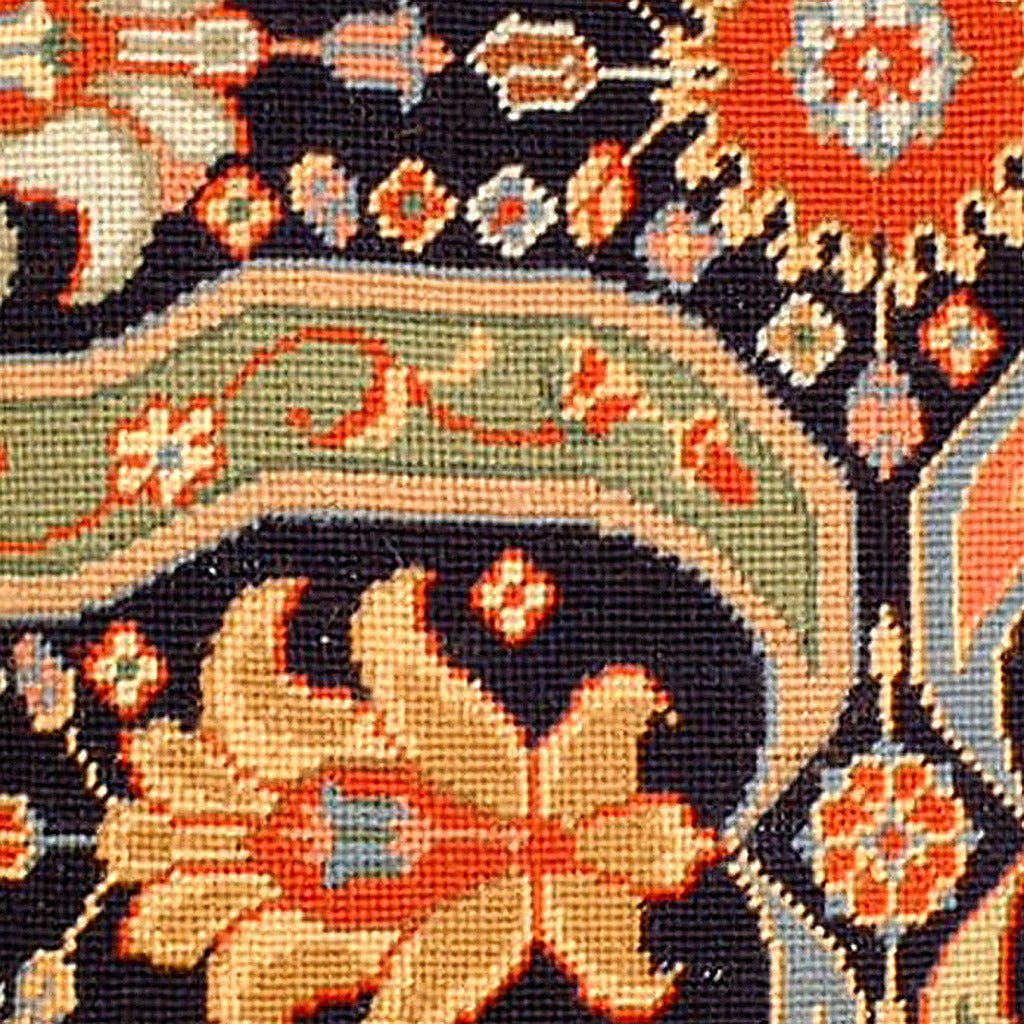
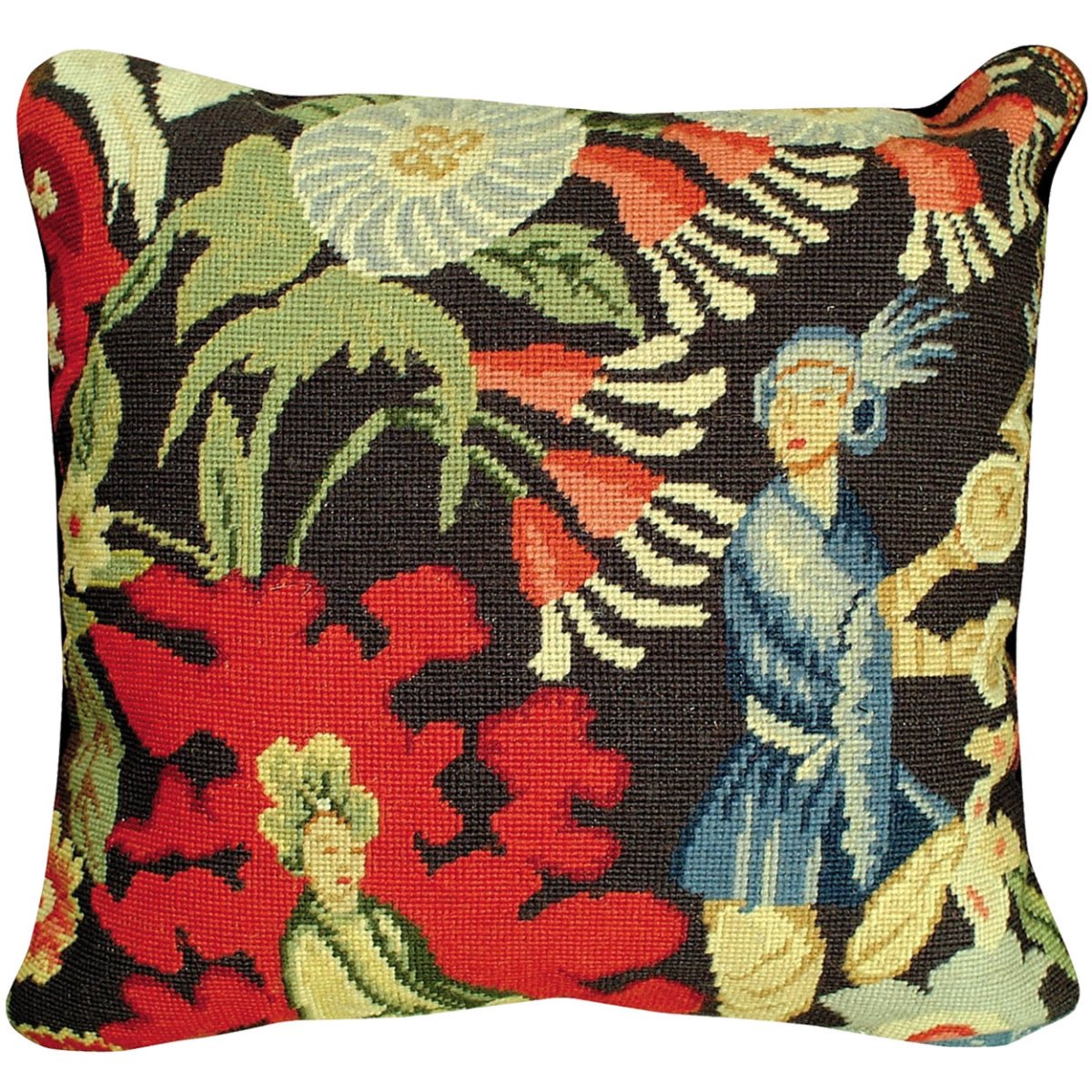
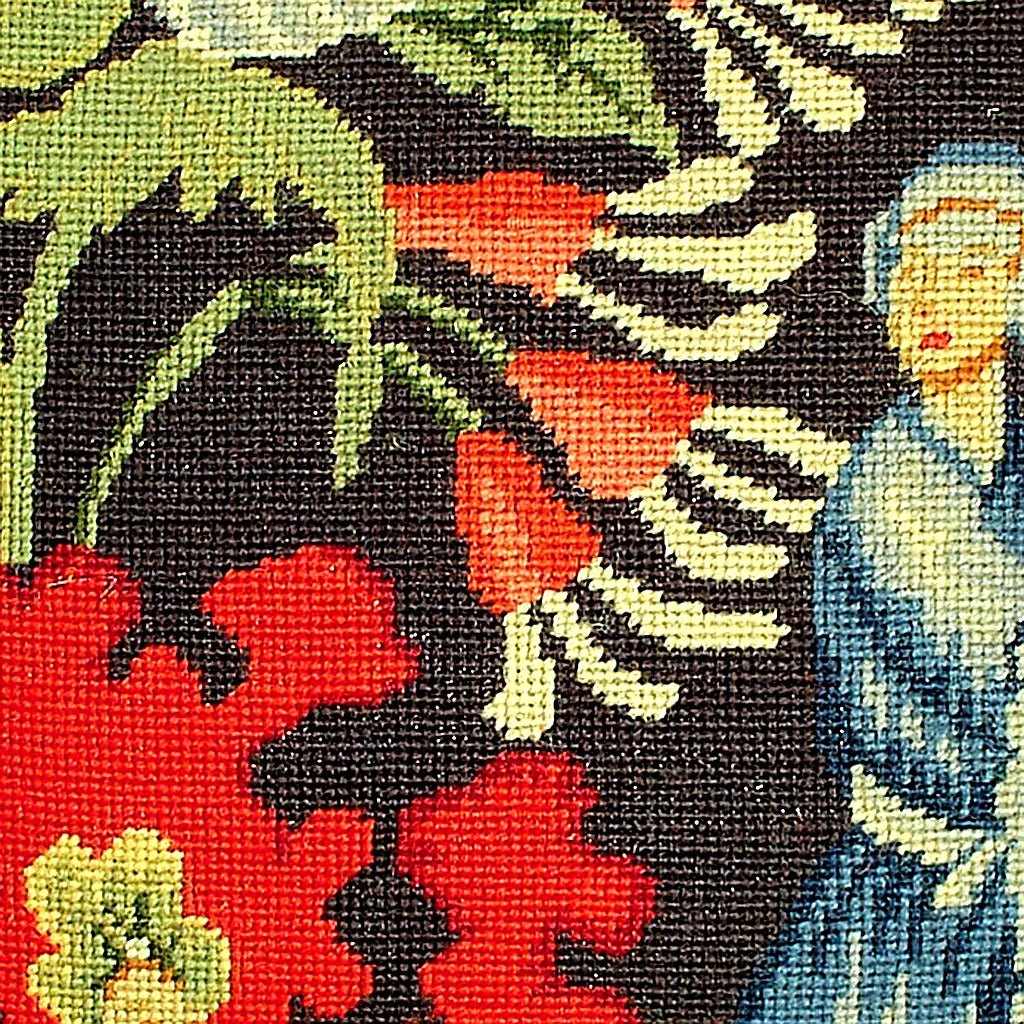
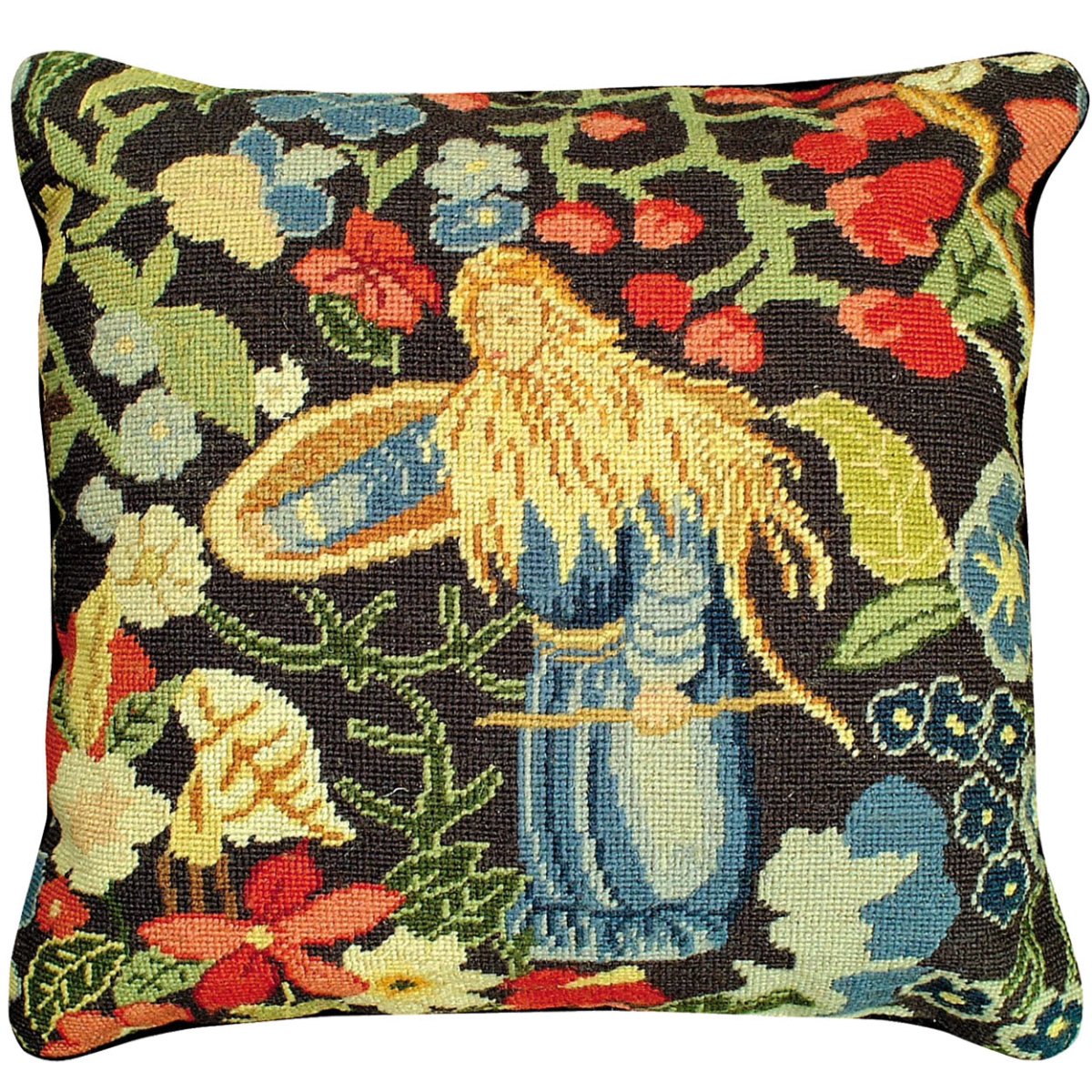
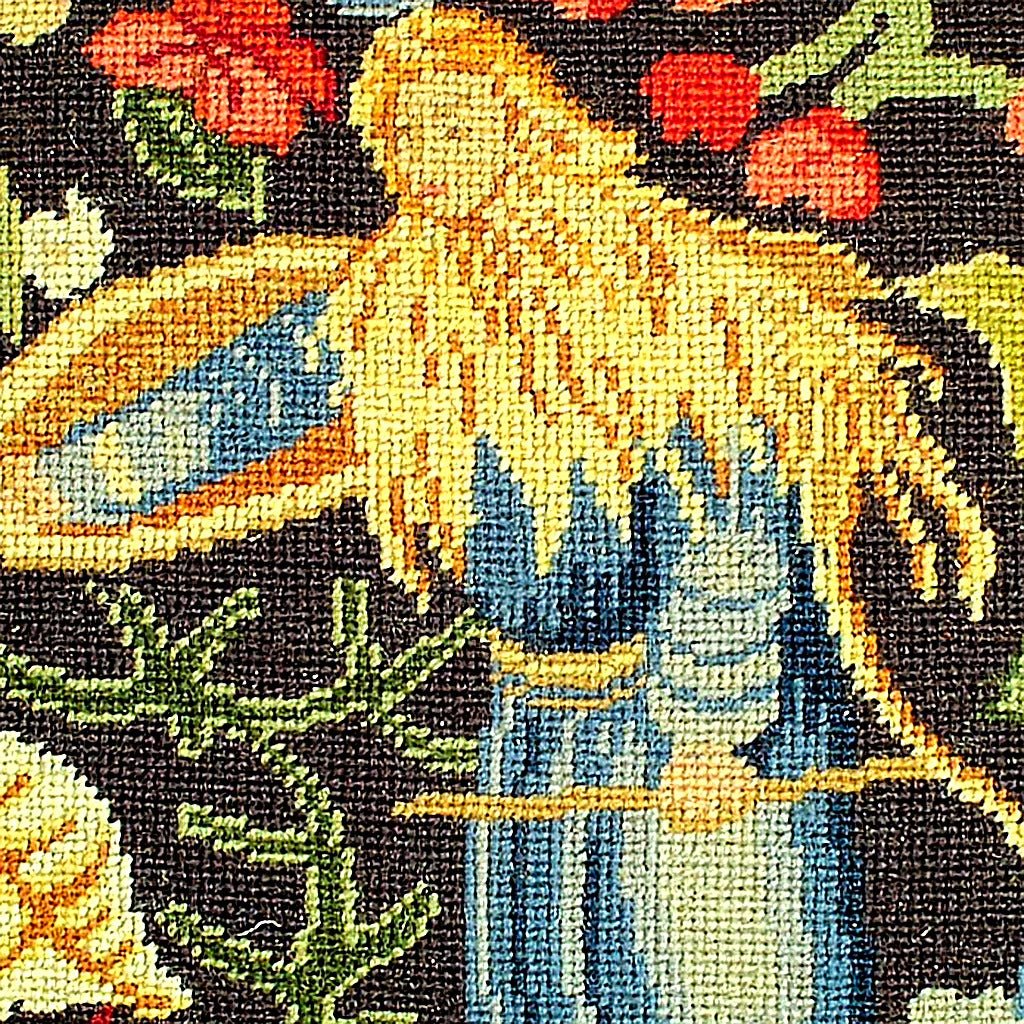
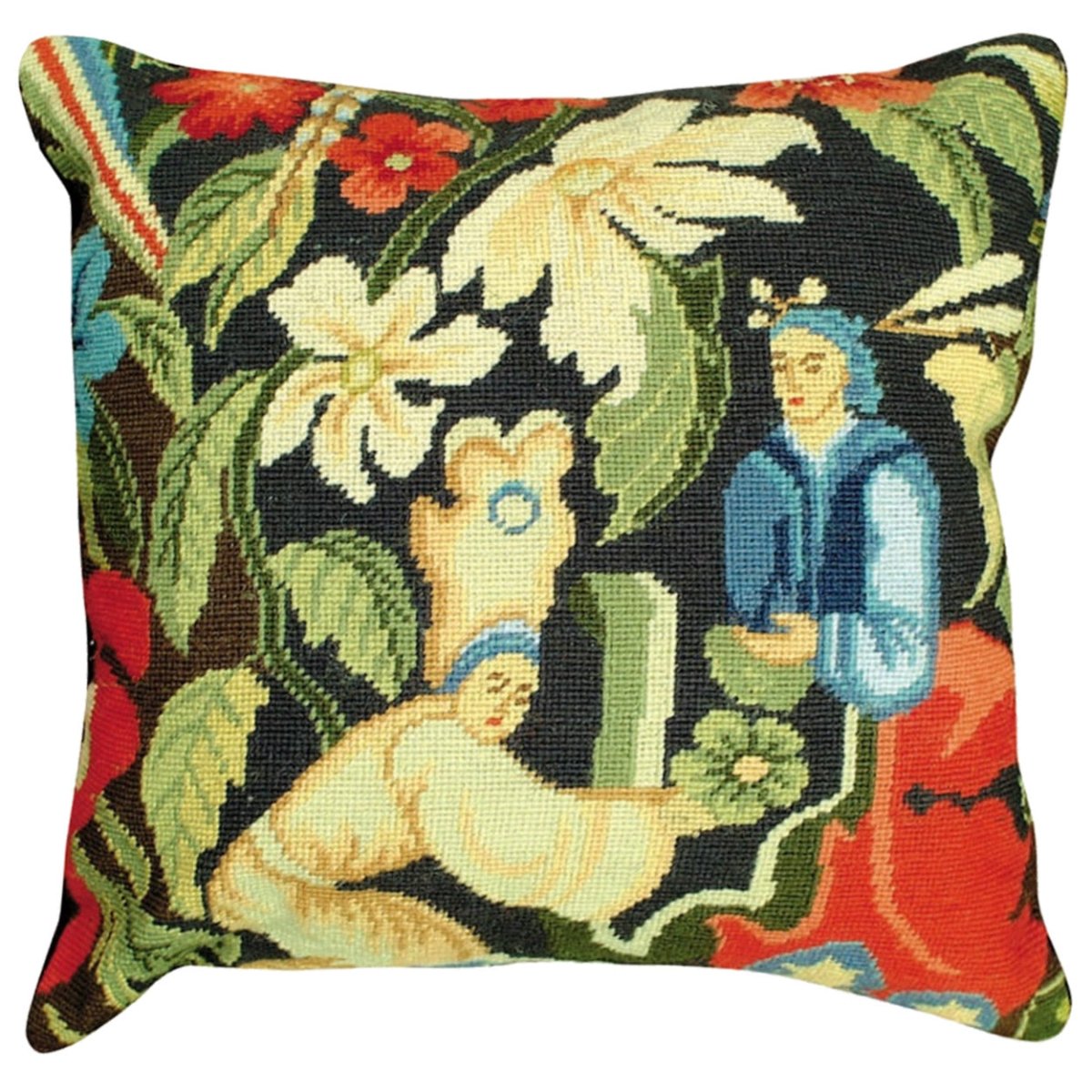
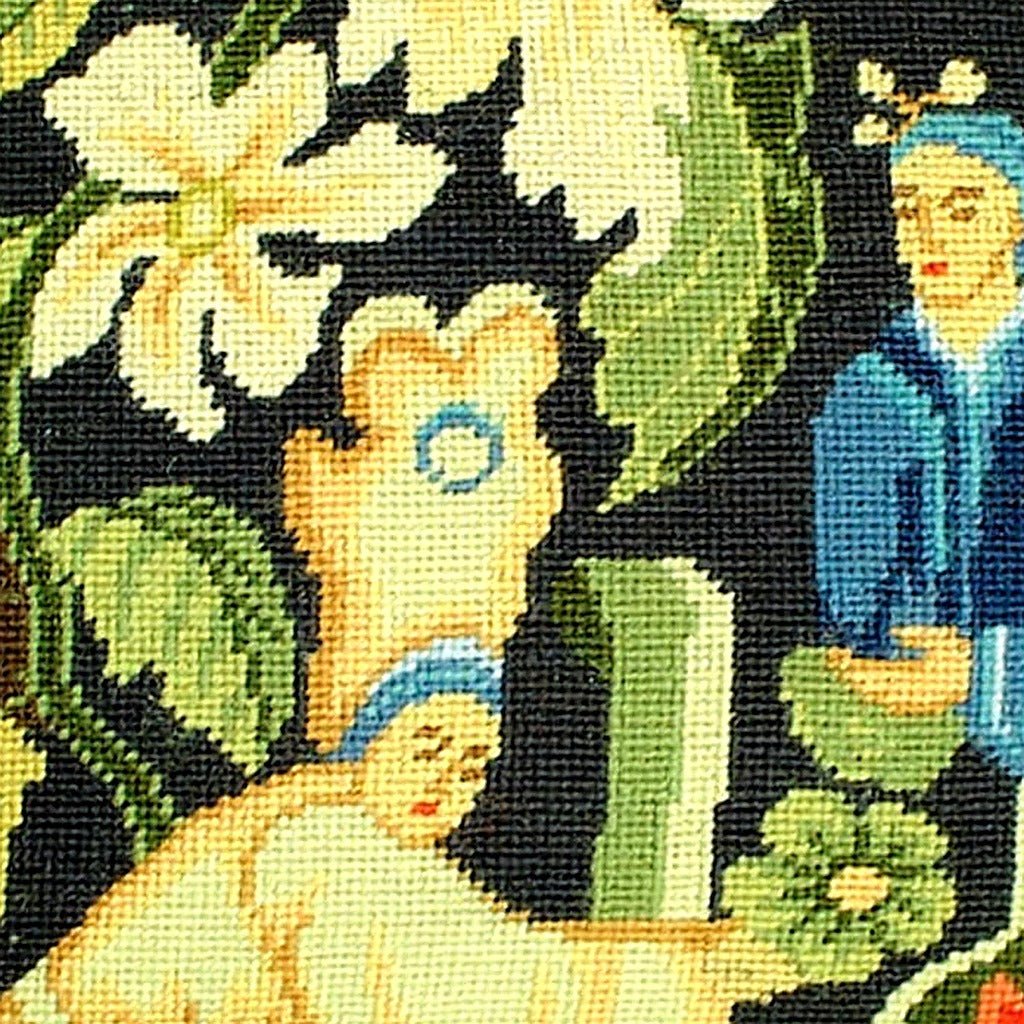
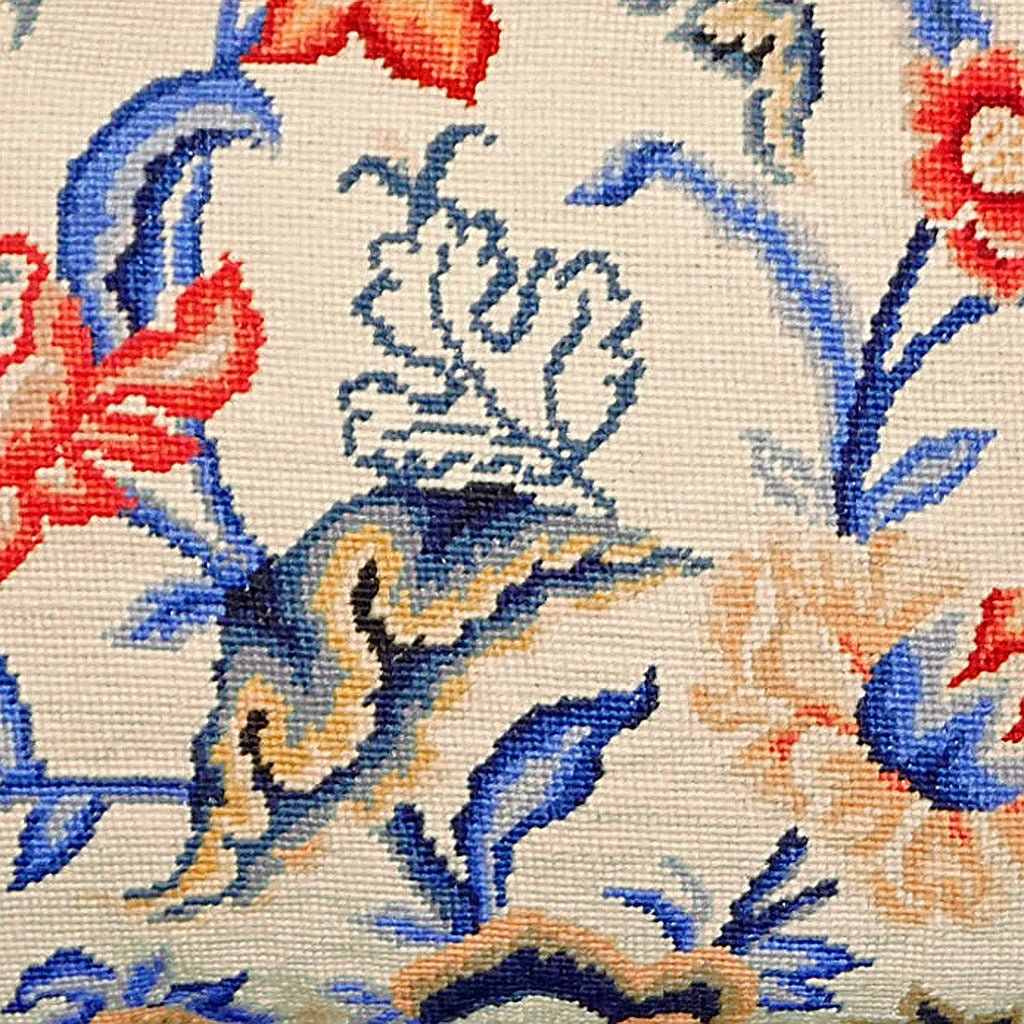
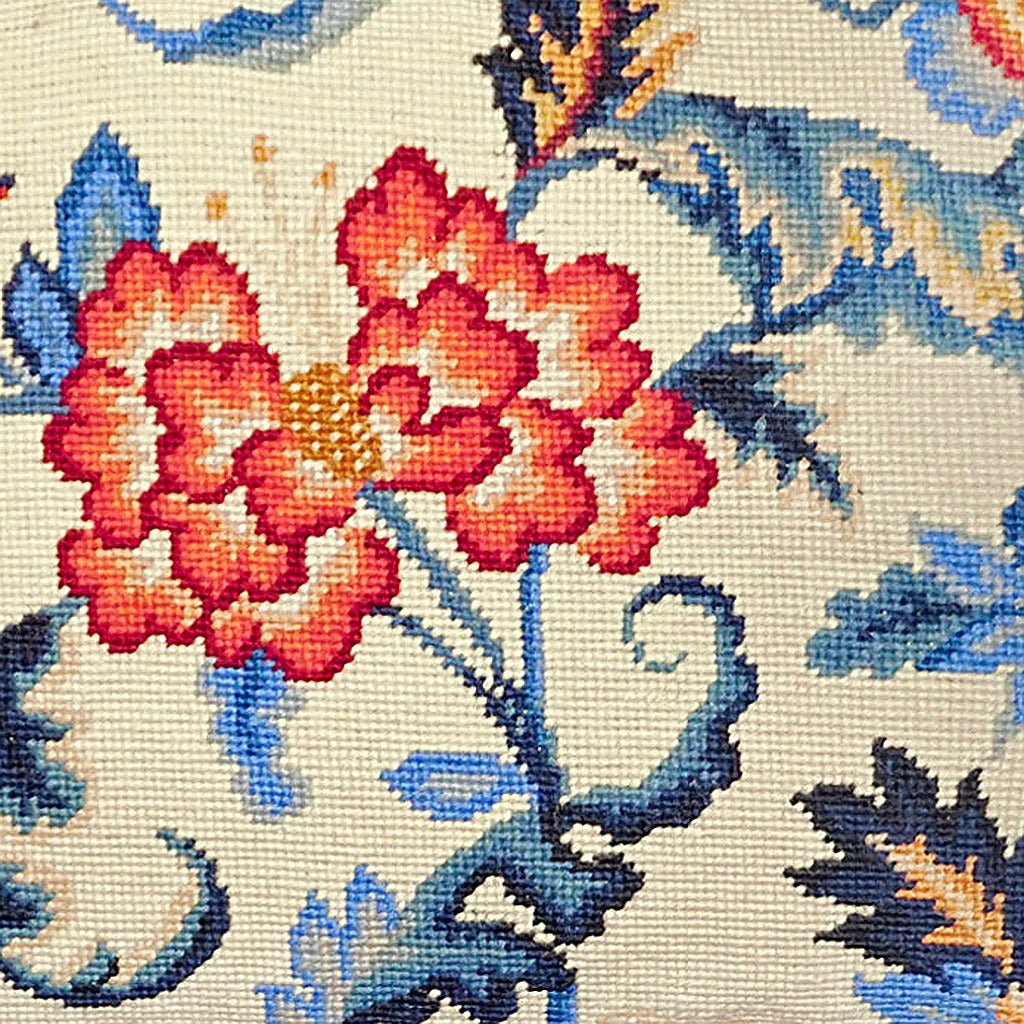
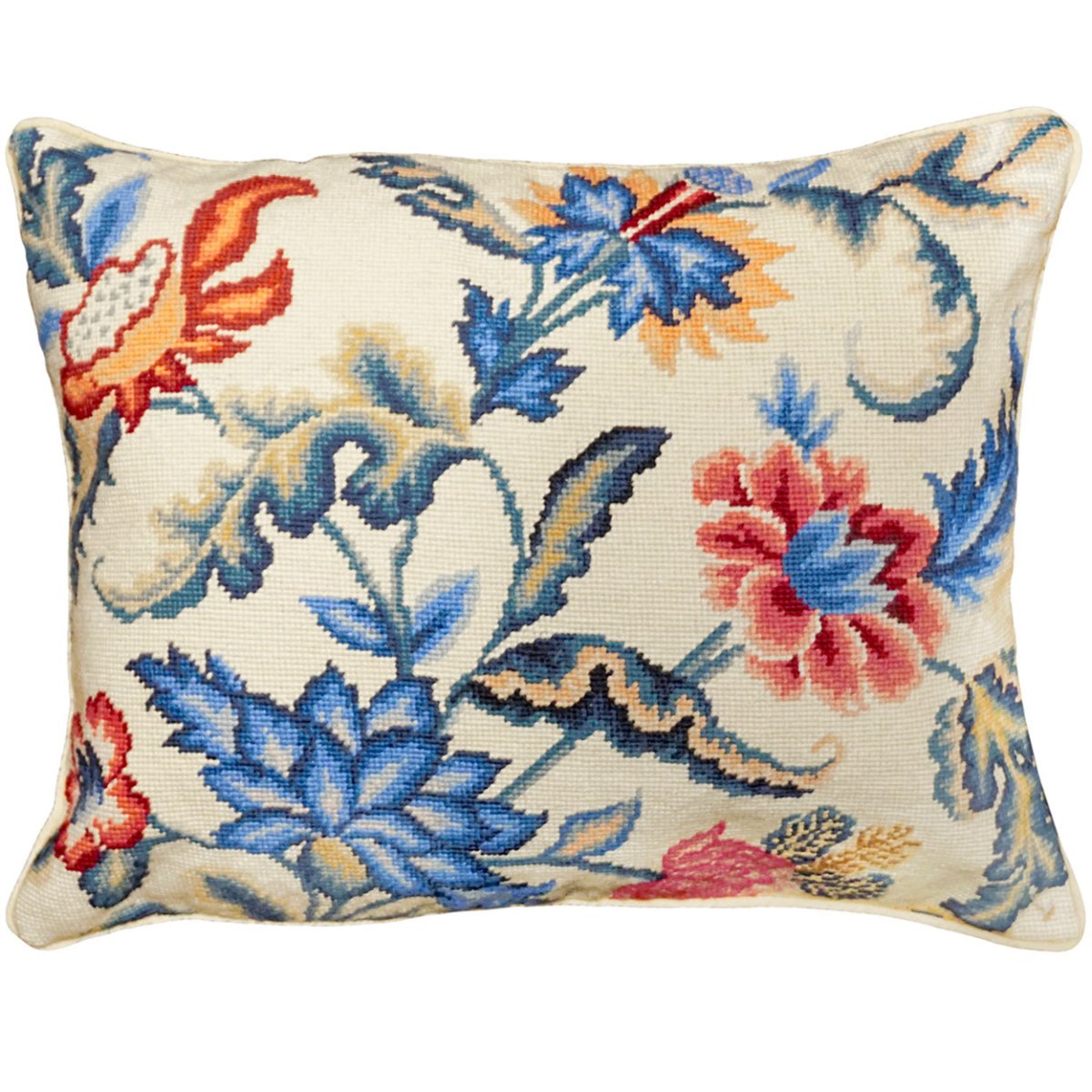
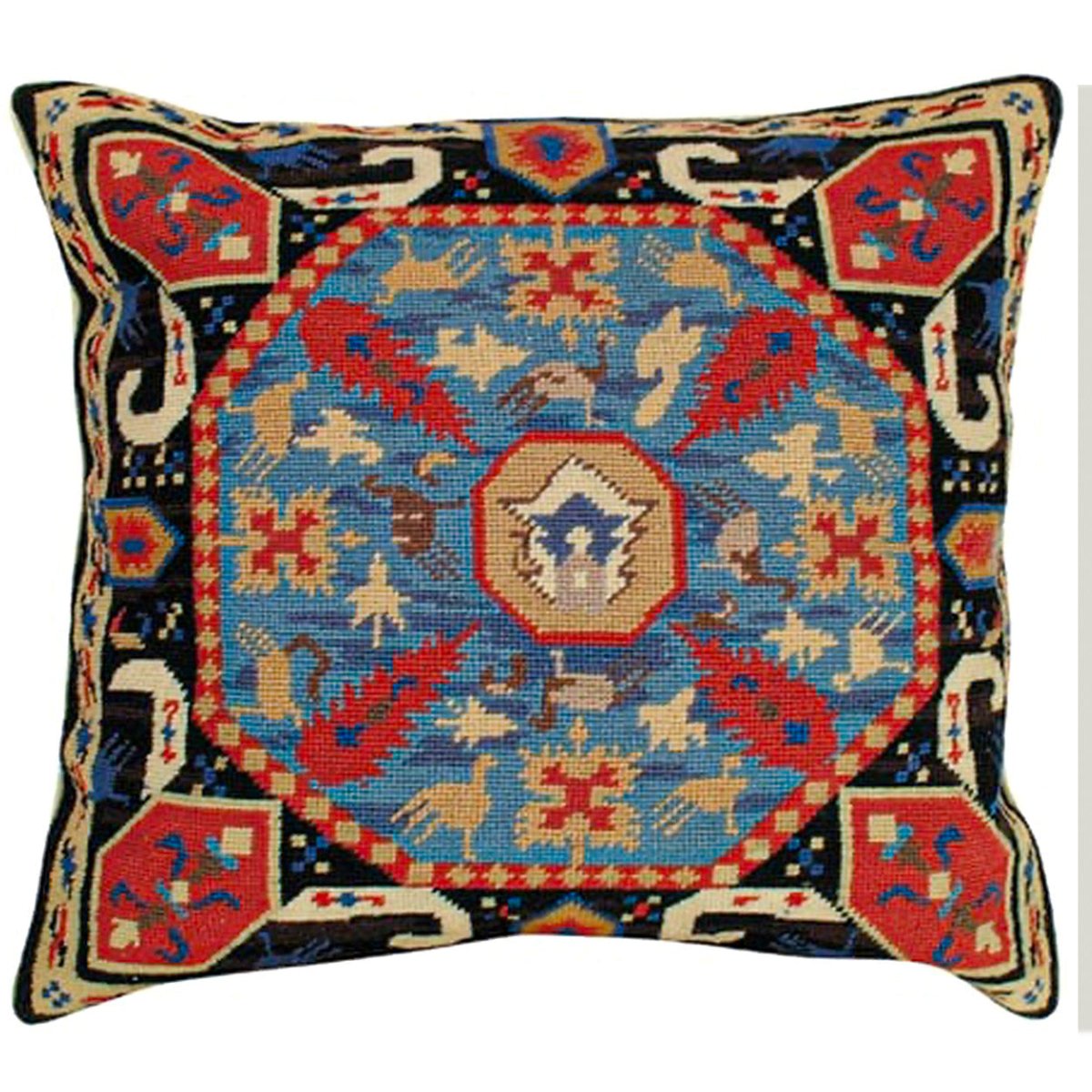
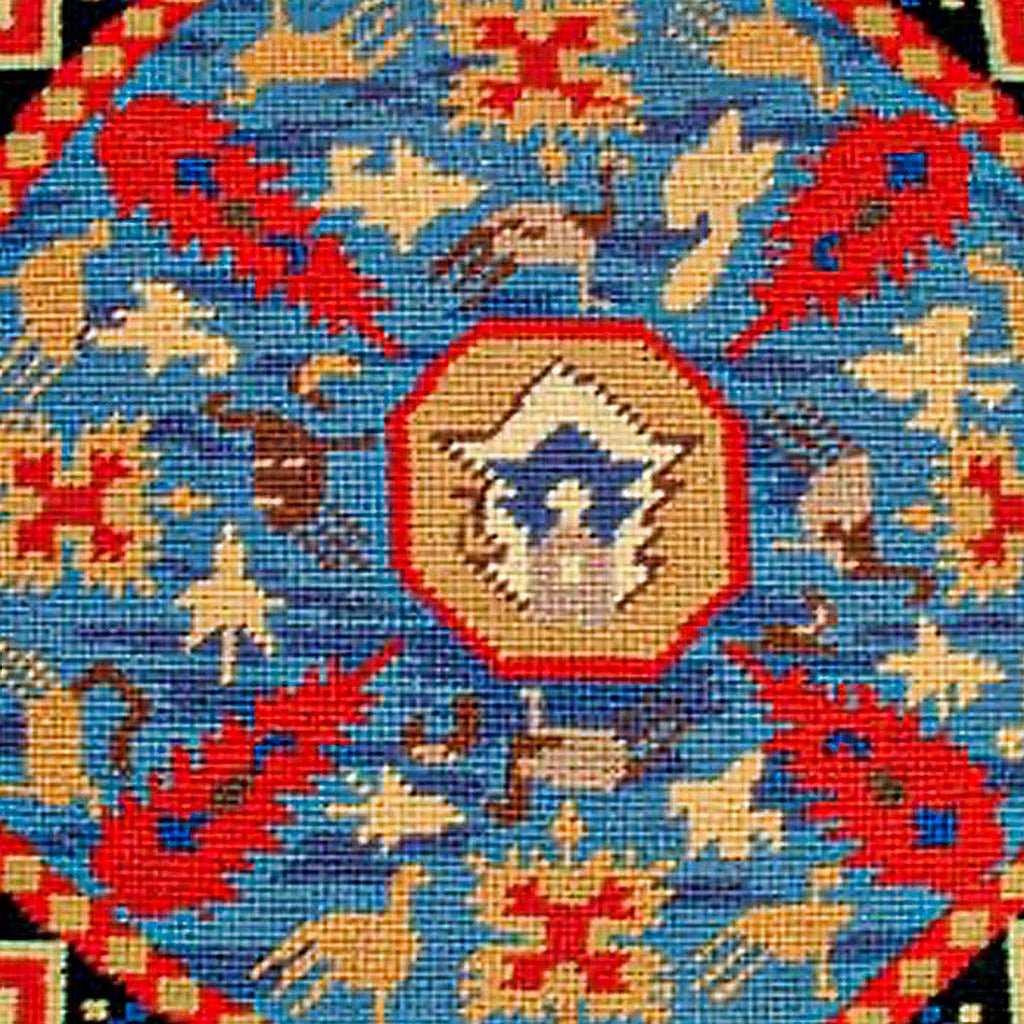
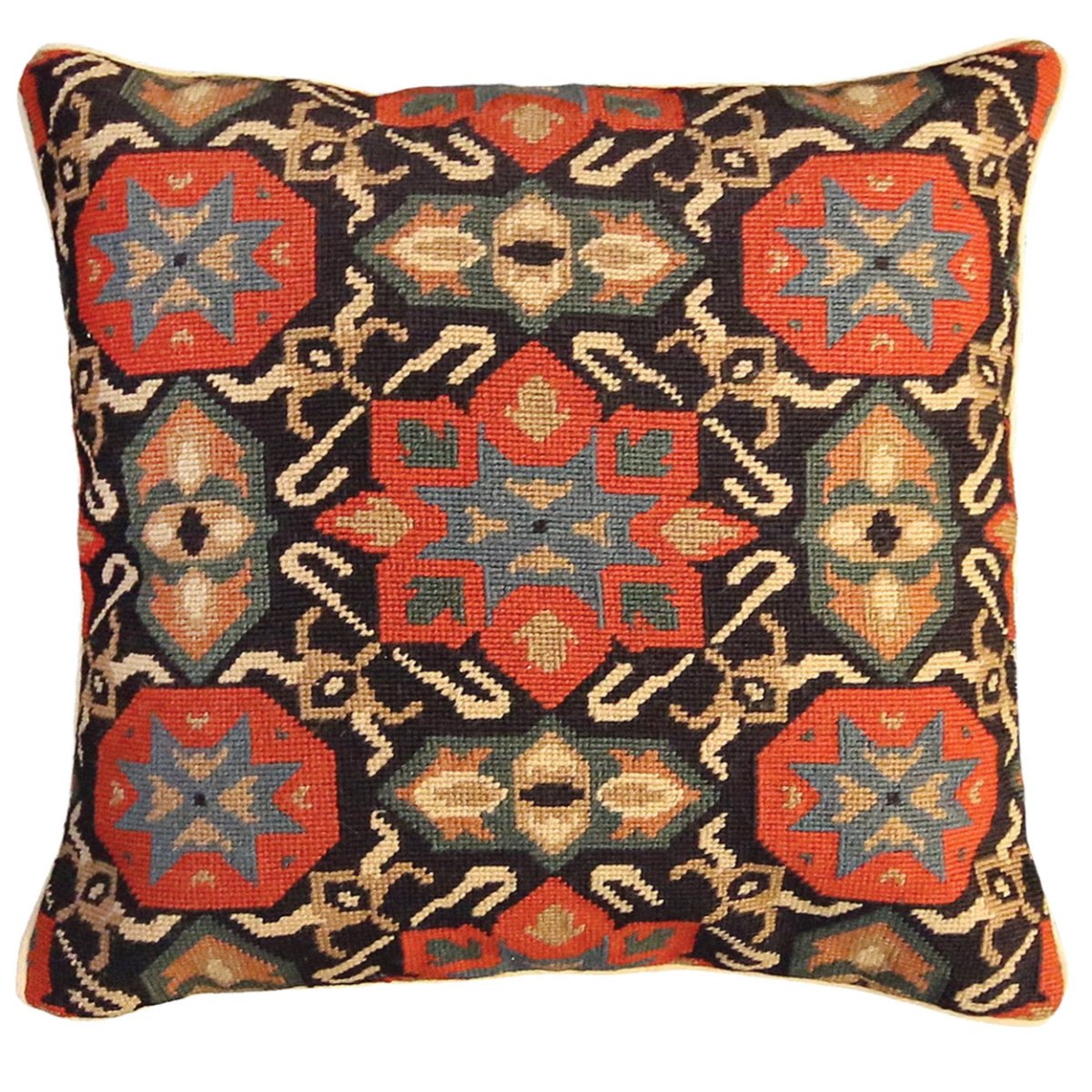
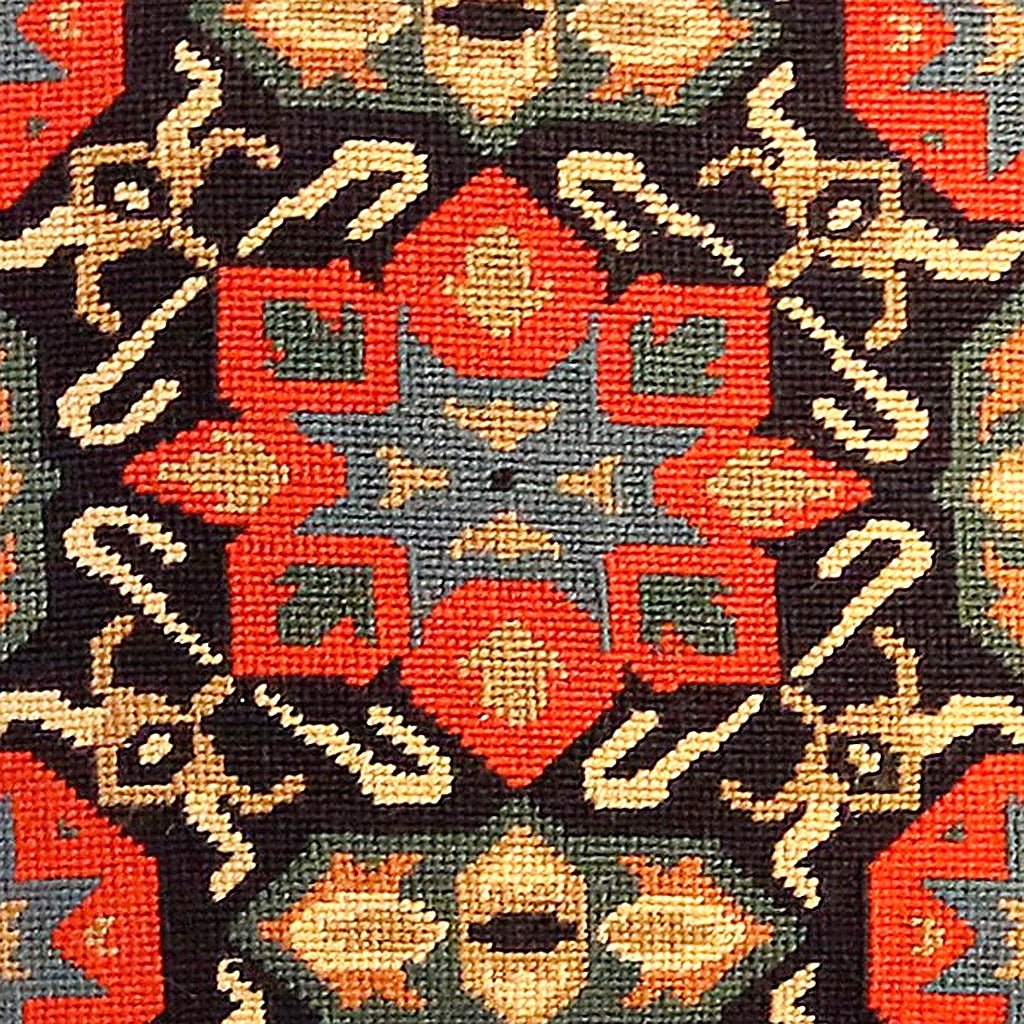
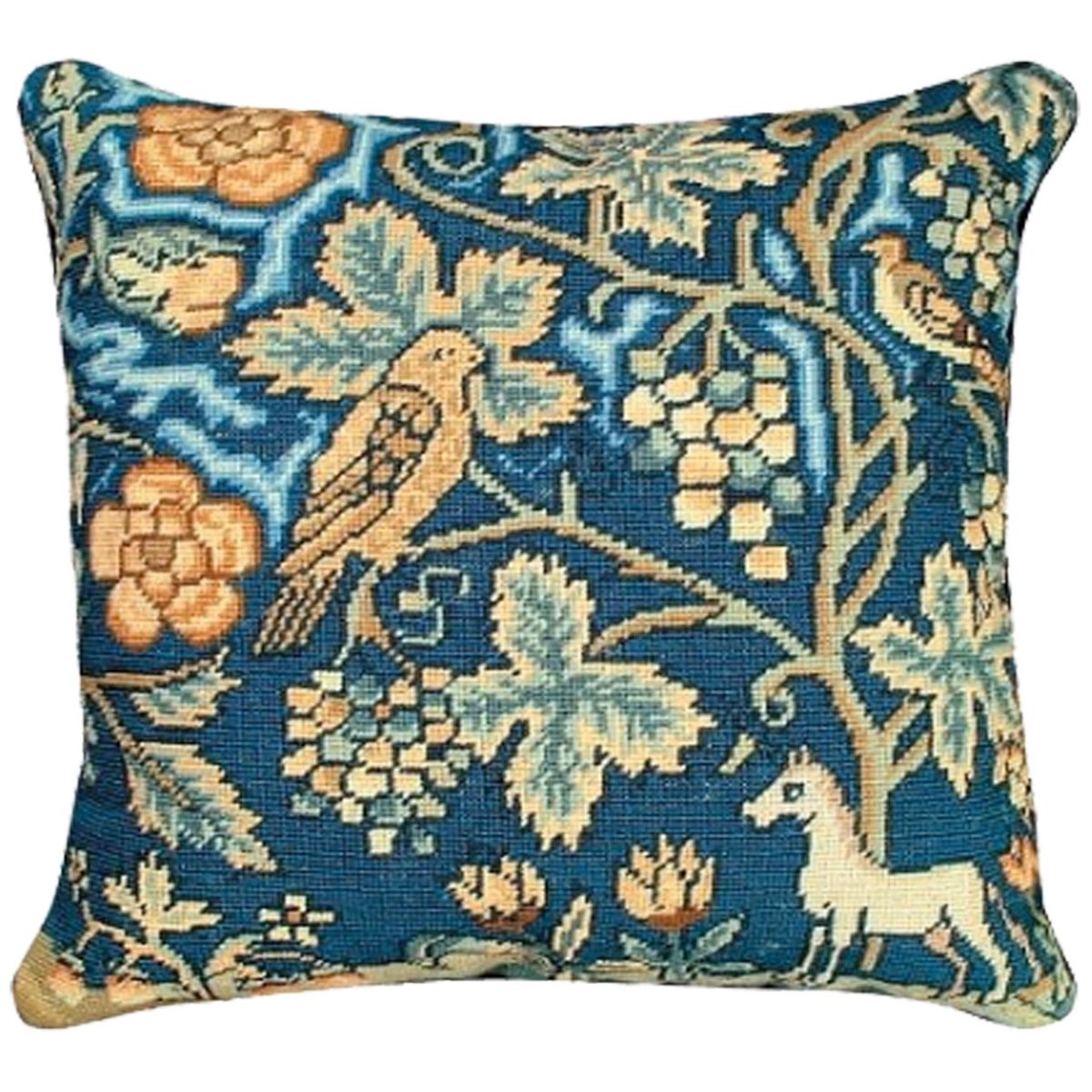
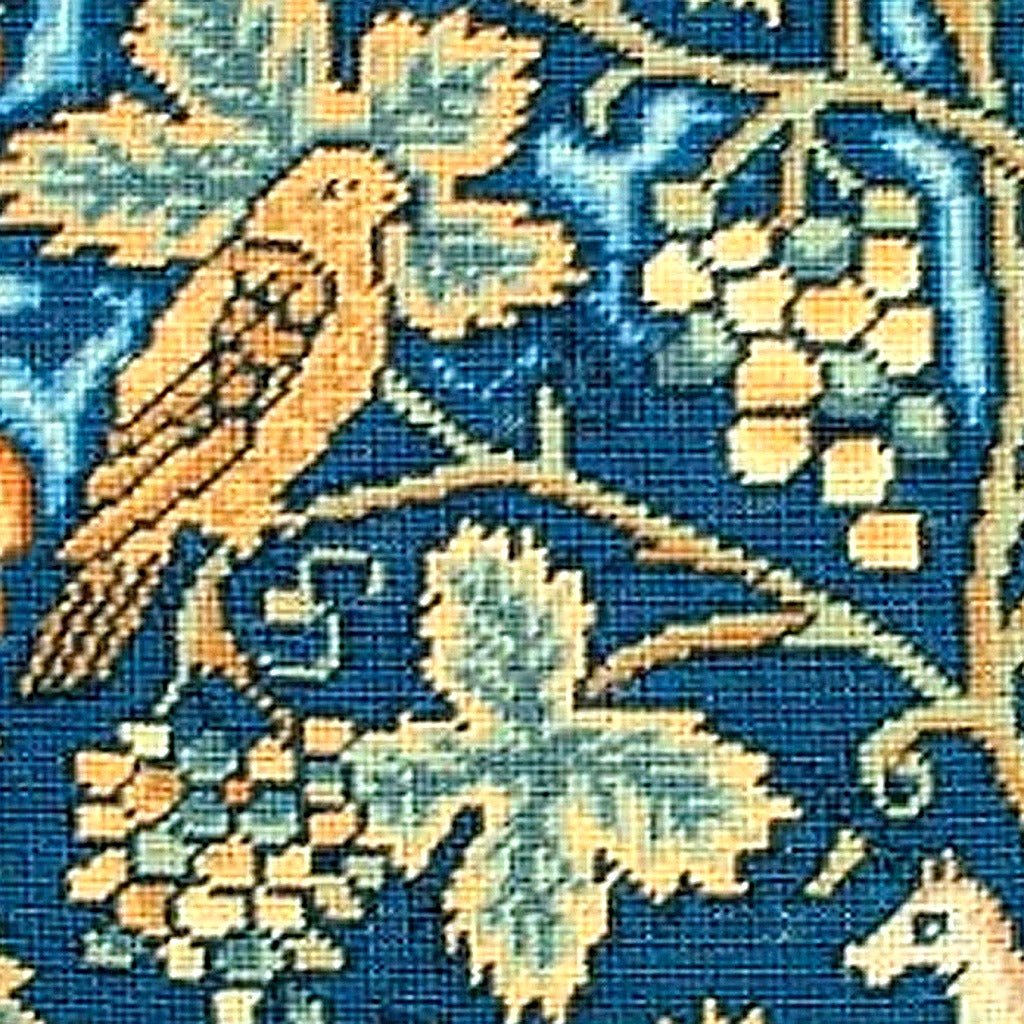
Tapestry designs are the oldest pictorial tradition in needlework, and they hold up at pillow scale better than almost anything else. Medieval figures and heraldic beasts, Turkish and Caucasian rug geometry, and dense botanical work all sit here together, worked in fine-gauge wool needlepoint. What connects them is not subject but density. These are the pieces where the stitch count runs high enough to carry real detail: shading inside a single leaf, the step of a border, the fall of a robe. That is also why they cost more than a simpler design, and why they outlast one.
What "Tapestry" Means on a Pillow
A true tapestry is woven on a loom, with the design built into the cloth as it is made. What is almost always sold as a tapestry pillow today is needlepoint: wool worked stitch by stitch through canvas to reproduce those same pictorial traditions. The distinction matters to weavers and to nobody else, but it is worth being straight about. Everything in this collection is hand-stitched needlepoint in the tapestry tradition, not loom-woven cloth.
The Traditions Behind the Designs
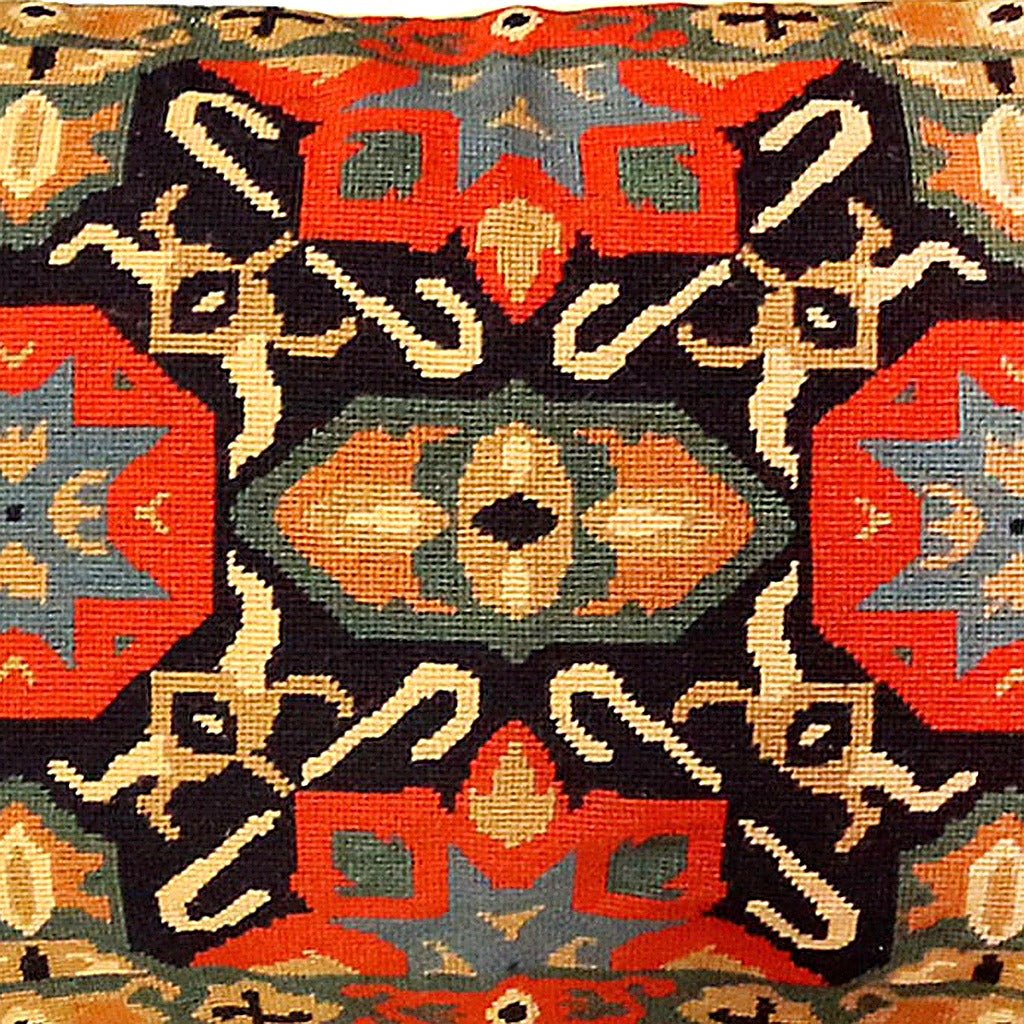
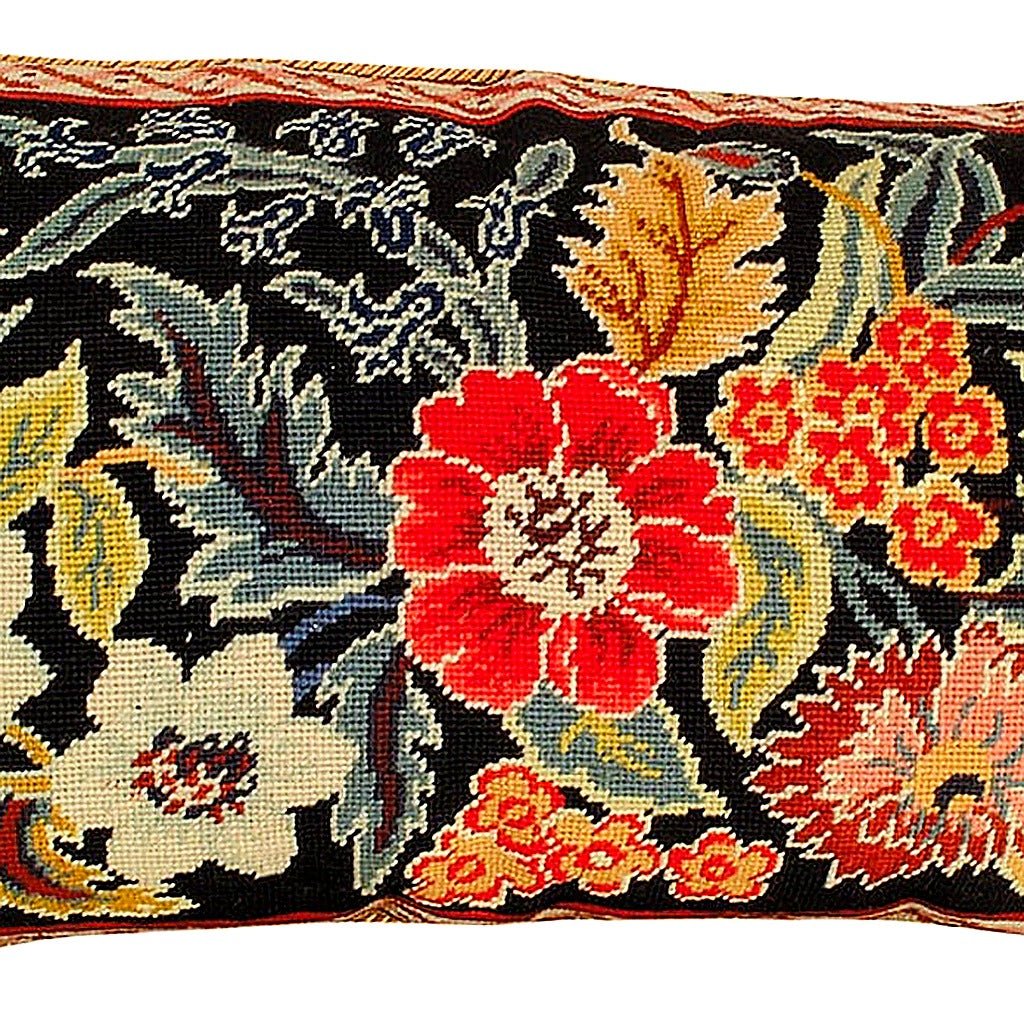
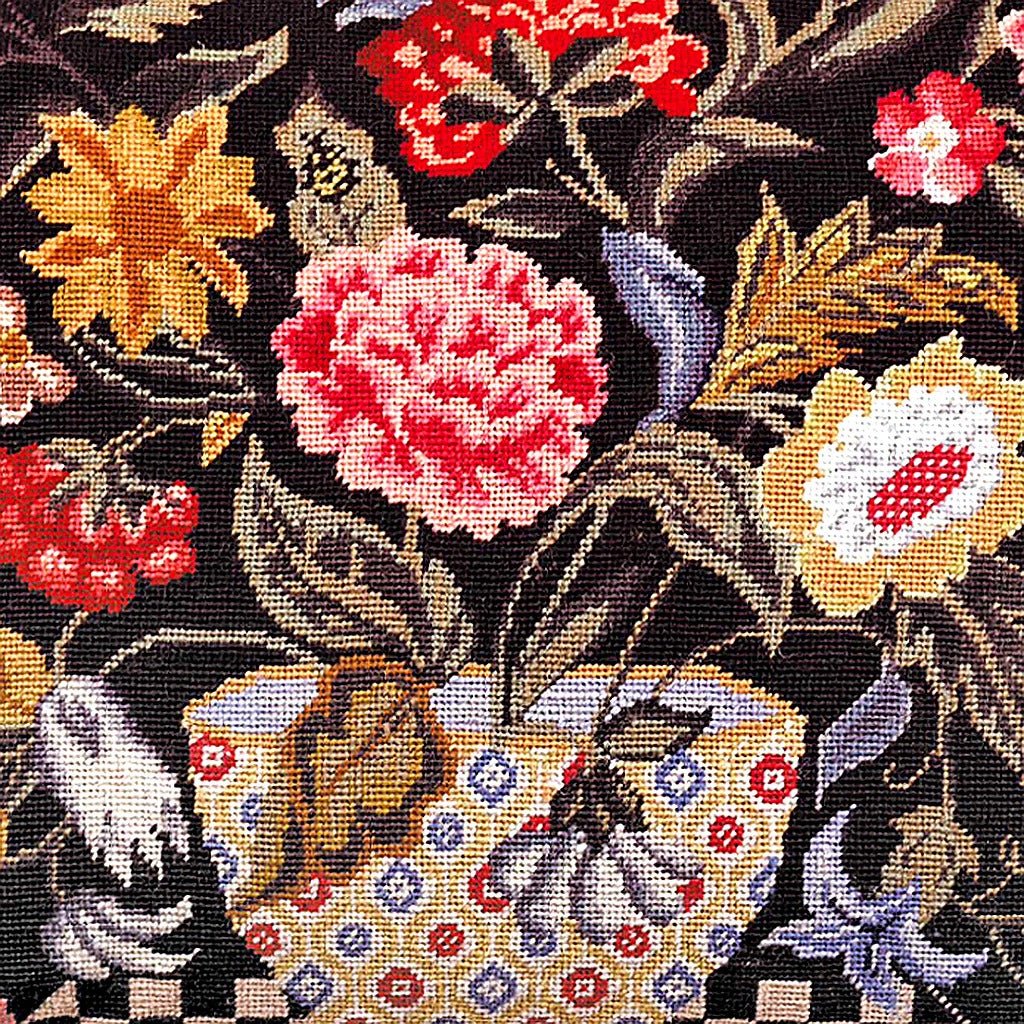
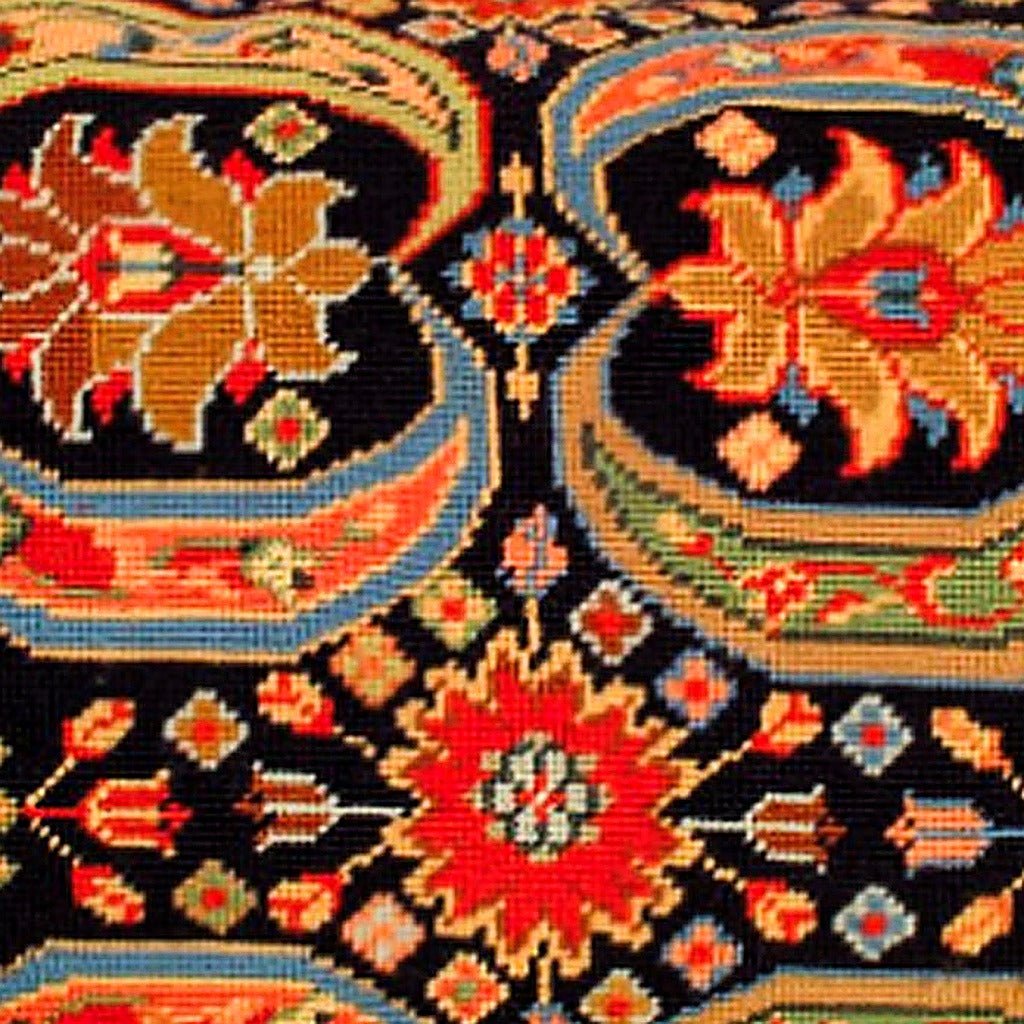
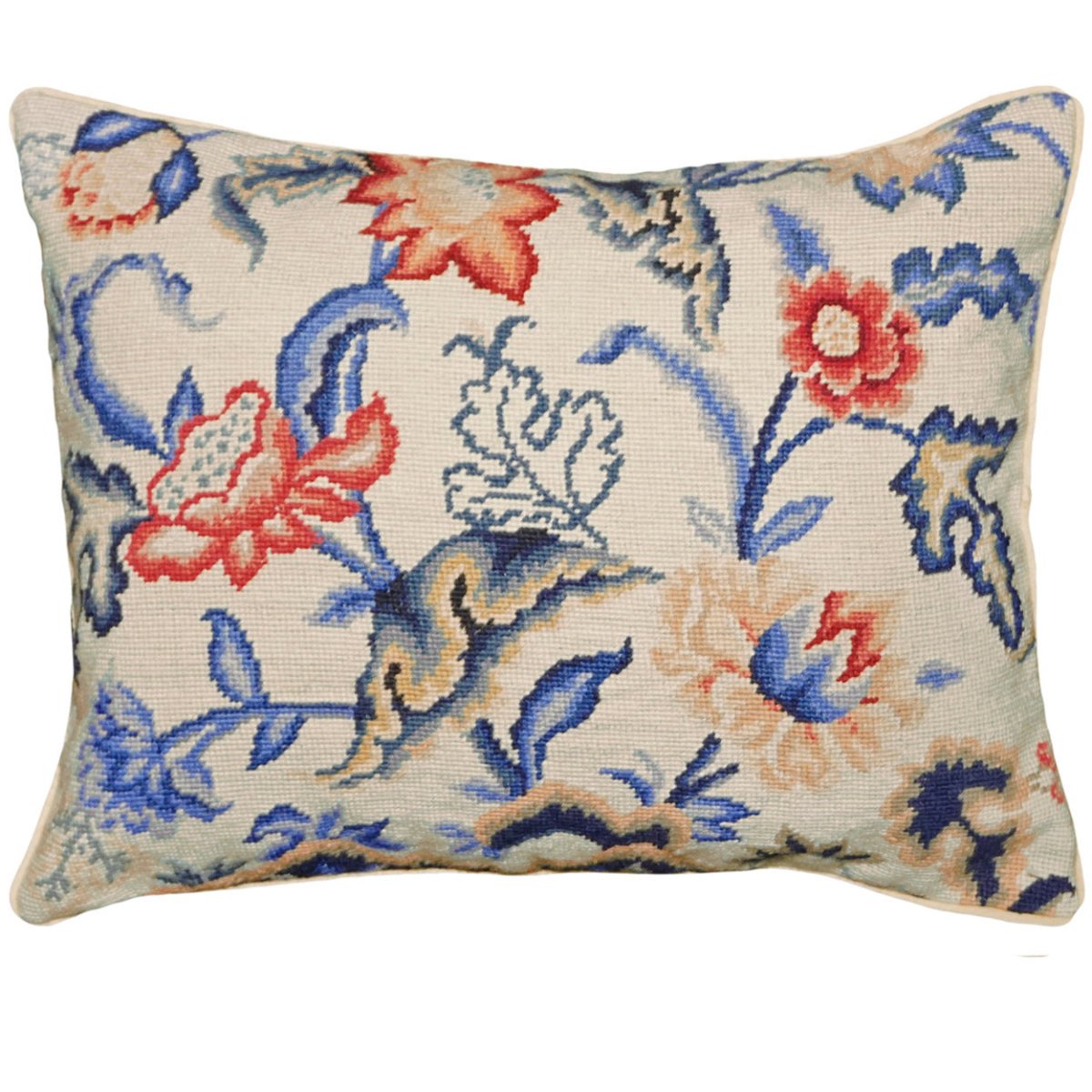
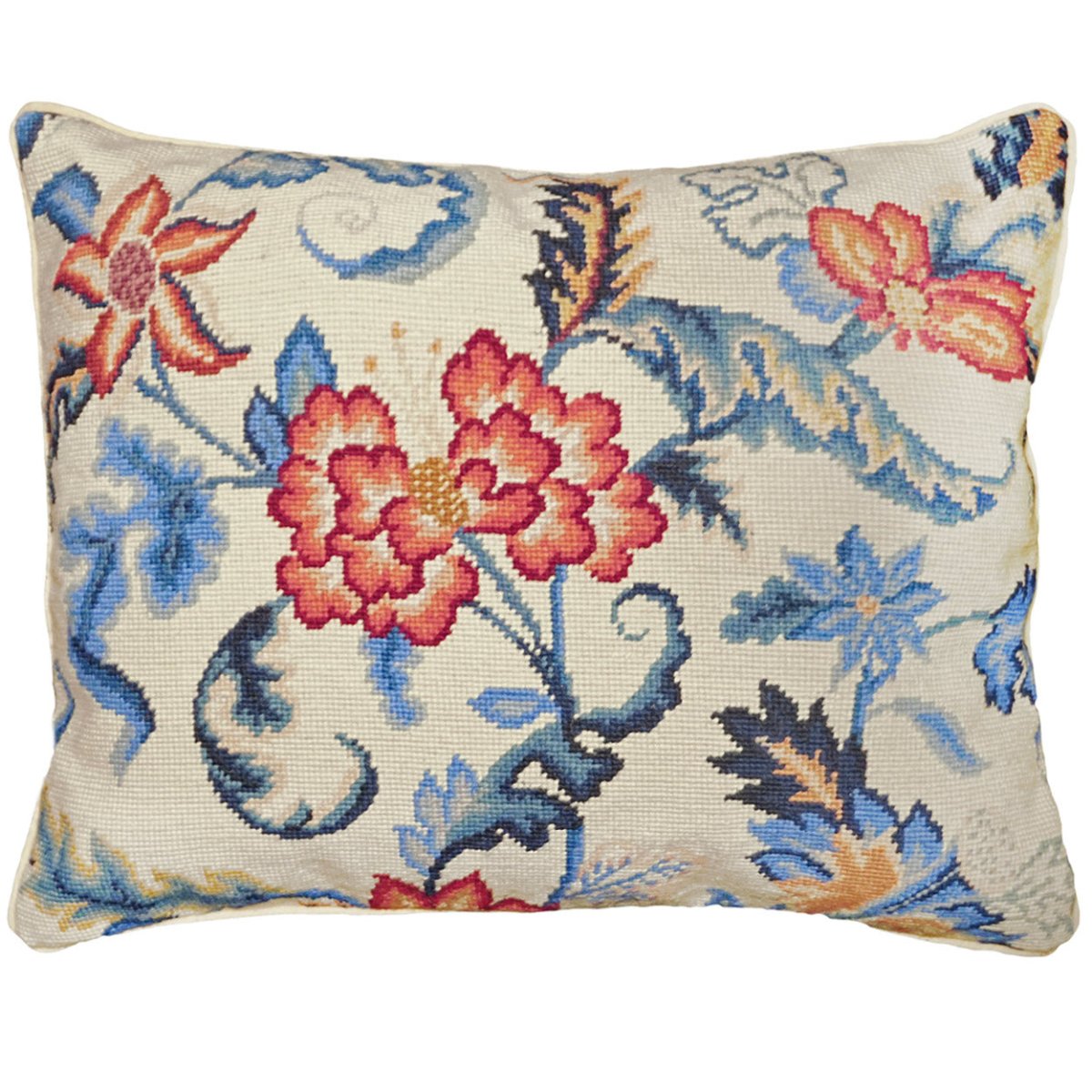
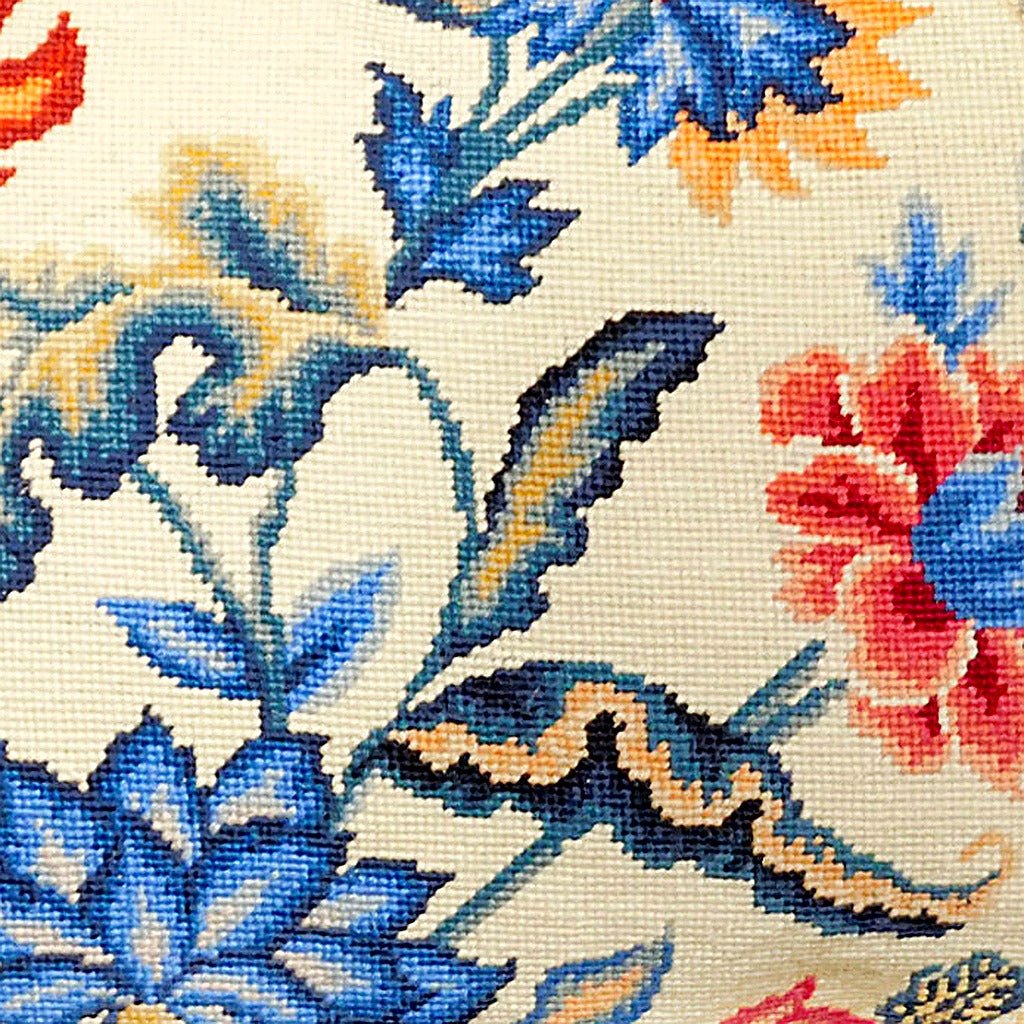
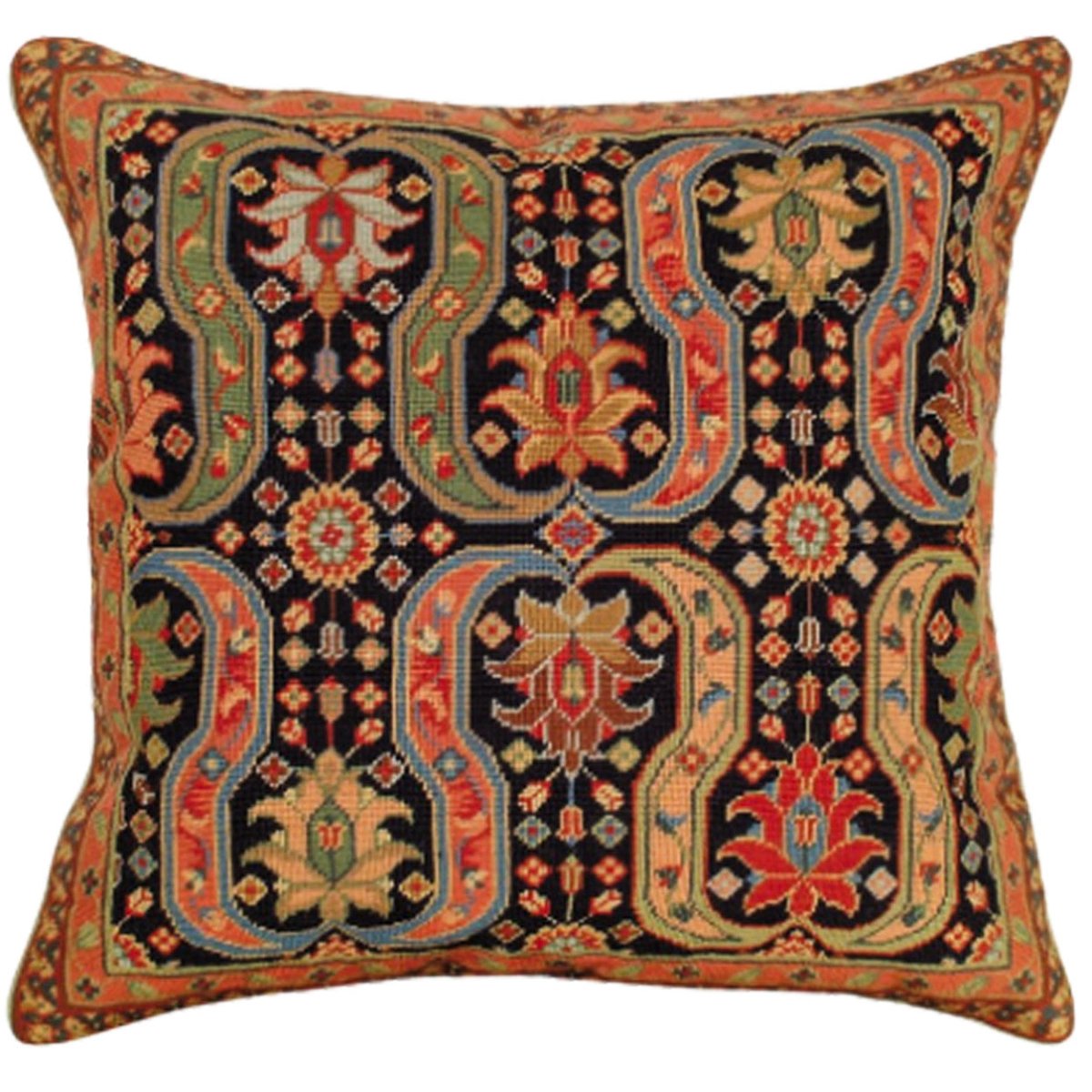
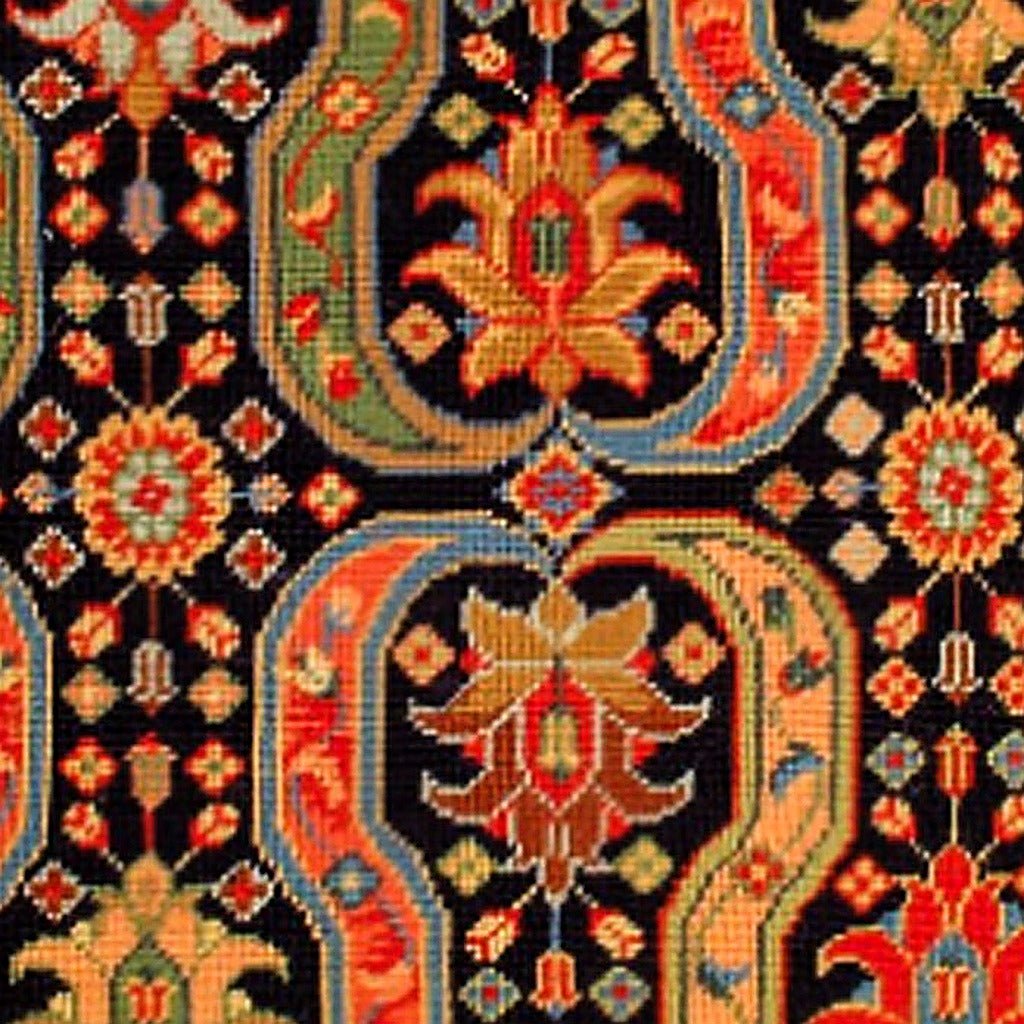
Medieval European tapestry is the source of the whole genre: dense grounds, heraldic animals, and backgrounds scattered with small flowers. The Middle Age designs carry that directly, figures and beasts set against deep, saturated fields. The botanicals sit at the opposite end, built around individual plants rendered with enough stitch density to hold shading and depth rather than flat blocks of color, with the finest of them worked as petit point. Caucasian and Anatolian rug patterns bring the geometric side, the medallions and stepped borders that came off village looms across Turkey and the Caucasus, and they read cleaner at pillow scale than they ever do underfoot. Each is very different in a room, and they mix better than you would expect because they share a palette of muted wool colors.
Where Tapestry Pieces Work
These are the pillows for a room with old things in it. Against a leather chesterfield, on a window seat, in a study with books and dark wood. They are less at home in a bright minimal room, where the density of the pattern has nothing to sit against. If your room is modern and you want one anyway, use exactly one, and let it be the only patterned thing in view.
Living With Them
Fine gauge and dense wool mean these are built for decades rather than seasons. Dry clean rather than washing, ideally with someone who works in wool textiles. Keep them out of direct sun, which fades wool faster than anything else, and store them dry in a breathable bag rather than sealed plastic. Every cover has a zippered back and arrives with a poly insert included.